
Acupuncture & Nervous System Regulation: How Acupuncture Can Help Your Body Find Balance
Have you ever felt completely exhausted but unable to relax?
Maybe you're tired all day but suddenly wide awake when your head hits the pillow. Maybe you're constantly tense, your digestion has become unpredictable, or you feel like you're always "on."
Sometimes it can feel like your body has forgotten how to slow down.
These experiences can be connected to the way your nervous system responds to stress.
At Bridgeland Acupuncture & Wellness, I see many people who come to acupuncture because they simply don't feel like themselves anymore. They're overwhelmed, they're not sleeping well, they're carrying tension everywhere, or their body seems to be reacting differently than it used to.
Often, there isn't just one symptom to address. Instead, there is a bigger picture.
And this is where understanding the nervous system can be helpful.
What Does Nervous System Regulation Actually Mean?
Your nervous system is constantly taking in information and deciding how your body should respond.
Your autonomic nervous system controls many functions that happen automatically, including heart rate, breathing, digestion, blood pressure, and aspects of sleep and recovery.
Two important branches are the sympathetic and parasympathetic nervous systems.
Your sympathetic nervous system helps you respond when you need to act. You may have heard this described as your "fight or flight" response.
Your parasympathetic nervous system supports rest, digestion, recovery, and restoration.
You need both.
Being regulated doesn't mean being relaxed all the time. Life is stressful sometimes, and your body is supposed to respond to that stress.
Healthy regulation is really about flexibility, being able to become activated when you need to and then return toward a calmer state when the stress has passed.
When that flexibility becomes harder to access, people often use the term nervous system dysregulation to describe what they're experiencing.
"Nervous system dysregulation" isn't a medical diagnosis, and symptoms can have many different causes. But it can be a useful way to understand why stress may start showing up throughout the body.
What Are the Signs of a Dysregulated Nervous System?
Nervous system dysregulation can look different from person to person.
Some people feel constantly activated, anxious, or restless.
Others feel exhausted, depleted, and disconnected from their usual energy.
You might notice:
Difficulty falling asleep or staying asleep
Feeling tired even after getting enough sleep
Racing thoughts or difficulty "shutting your brain off"
Feeling anxious, overwhelmed, or constantly on edge
Irritability or feeling more emotionally reactive
Headaches or migraines
Jaw, neck, or shoulder tension
Digestive changes such as bloating, constipation, diarrhea, or nausea
Changes in appetite
Feeling "wired but tired"
Brain fog or difficulty concentrating
Increased sensitivity to stress
Chronic pain or increased pain sensitivity
Changes in menstrual cycles or PMS symptoms
Difficulty relaxing even when you finally have time to rest
Feeling burned out or emotionally depleted
You don't need to experience all of these symptoms.
And if you're experiencing persistent, new, or concerning symptoms, it's important to have them assessed by your doctor or another appropriate healthcare professional.
So, Can Acupuncture Help Regulate the Nervous System?
Acupuncture may help support nervous system regulation by stimulating sensory nerves and influencing pathways involved in the brain, spinal cord, and autonomic nervous system.
Research has explored acupuncture's effects on autonomic nervous-system activity and its potential role in conditions associated with stress, sleep problems, pain, digestive symptoms, and other health concerns.
The research is still developing, and acupuncture isn't a cure-all.
But clinically, one of the things people often notice during acupuncture is that their body begins to settle.
Their breathing slows.
Their muscles soften.
Their mind becomes quieter.
They may feel sleepy.
For some people, that feeling of being able to finally "switch off" is a meaningful part of treatment.
How Can Acupuncture Help With Different Signs of Nervous System Dysregulation?
One of the reasons I love acupuncture is that we don't necessarily have to treat every symptom as a completely separate problem.
Your body is interconnected.
When we support the nervous system and address the individual pattern behind your symptoms, we may be able to support several areas of health at the same time.
1. Trouble Sleeping
One of the most common signs of stress is difficulty sleeping.
You might struggle to fall asleep, wake throughout the night, wake too early, or feel like your brain becomes more active the moment you get into bed.
Stress and sleep can create a frustrating cycle. Poor sleep can make it harder to cope with stress, while ongoing stress can make it harder to settle into restorative sleep.
Acupuncture may support relaxation and autonomic nervous-system regulation, which can make it easier for some people to transition into a more restful state.
When I work with someone for sleep, I don't just look at the fact that they're not sleeping.
I want to understand why their body isn't settling.
2. Anxiety and Feeling Constantly "On"
Sometimes nervous-system dysregulation feels like your body is constantly waiting for something to happen.
You may feel restless, overwhelmed, anxious, or unable to relax.
Your thoughts may keep going even when you desperately want them to stop.
Acupuncture can be a supportive part of a broader approach to stress and anxiety. Some research suggests acupuncture may help reduce anxiety symptoms, although the overall evidence is still limited and more high-quality research is needed.
Acupuncture isn't a replacement for therapy, medication, or other mental-health care when those are appropriate.
Instead, think of it as another tool that may help support your body's response to stress.
3. Headaches, Pain and Muscle Tension
Stress doesn't just happen in your mind.
Your body responds too.
Maybe your shoulders creep toward your ears when you're stressed. You clench your jaw. Your neck becomes tight. You develop a headache.
Over time, that tension can become a cycle of its own.
Acupuncture can be used to support pain management and muscle tension while also considering the stress and nervous-system factors that may be contributing to how you're feeling.
For chronic pain, this bigger-picture approach can be especially important.
Rather than simply chasing the painful area, I want to understand what else is happening in your body.
4. Digestive Problems
Your digestive system and nervous system are closely connected.
When you're stressed, you may notice changes in your digestion.
This can look like:
Bloating
Constipation
Diarrhea
Indigestion
Nausea
Changes in appetite
A "nervous stomach"
This is one reason stress can show up physically in your gut.
Acupuncture may influence autonomic pathways involved in digestive function, and it can be incorporated into a broader approach to digestive symptoms, particularly when stress appears to be part of the picture.
Again, the goal isn't to treat your stomach as though it exists separately from the rest of you.
5. Hormones and Women's Health
Stress, sleep, hormones, and the nervous system don't operate independently.
This is particularly important when we're talking about women's health.
Some people notice changes in their menstrual cycle, PMS symptoms, fertility journey, or perimenopause and menopause symptoms during periods of significant stress.
Acupuncture can be used alongside conventional healthcare to support symptoms and overall well-being during these different stages of life.
At Bridgeland Acupuncture & Wellness, I look at the whole picture.
Instead of asking only, "What hormone is causing this symptom?" we can also ask:
What else is happening in your body right now?
How are you sleeping?
How much stress are you carrying?
How is your digestion?
How are you feeling emotionally?
What has changed recently?
These pieces can provide important context.
6. Fatigue and the "Wired but Tired" Feeling
This might be one of the most frustrating experiences of prolonged stress.
You're exhausted.
But you can't relax.
You want to sleep.
But your brain won't stop.
You finally have a quiet moment, and instead of feeling peaceful, you feel restless or uncomfortable.
If this sounds familiar, you're not alone.
Acupuncture may be used as part of a broader strategy focused on supporting relaxation, sleep, stress management, and recovery.
The goal isn't to push your body to produce more energy.
It's to create space for rest and recovery.
Acupuncture Doesn't "Turn Off" Your Nervous System
This is an important distinction.
You don't want your nervous system to be switched off.
You want it to be responsive and adaptable.
Think about a car.
You need an accelerator.
You also need brakes.
Your sympathetic nervous system helps you respond when you need to act. Your parasympathetic nervous system supports rest and recovery.
The goal isn't to keep your foot permanently on the brake.
It's to be able to use both appropriately.
That ability to move between activation and recovery is an important part of feeling resilient.
What Happens During an Acupuncture Treatment?
If you've never had acupuncture before, you may be surprised by how relaxing it can be.
When you come to see me, we start by talking.
I want to understand what you're experiencing, how long you've been experiencing it, what your sleep looks like, how you're managing stress, and what other symptoms you're noticing.
From a Traditional Chinese Medicine perspective, I also look at your individual pattern.
Two people can both tell me they're "stressed," but their experiences, and therefore their treatments, may look completely different.
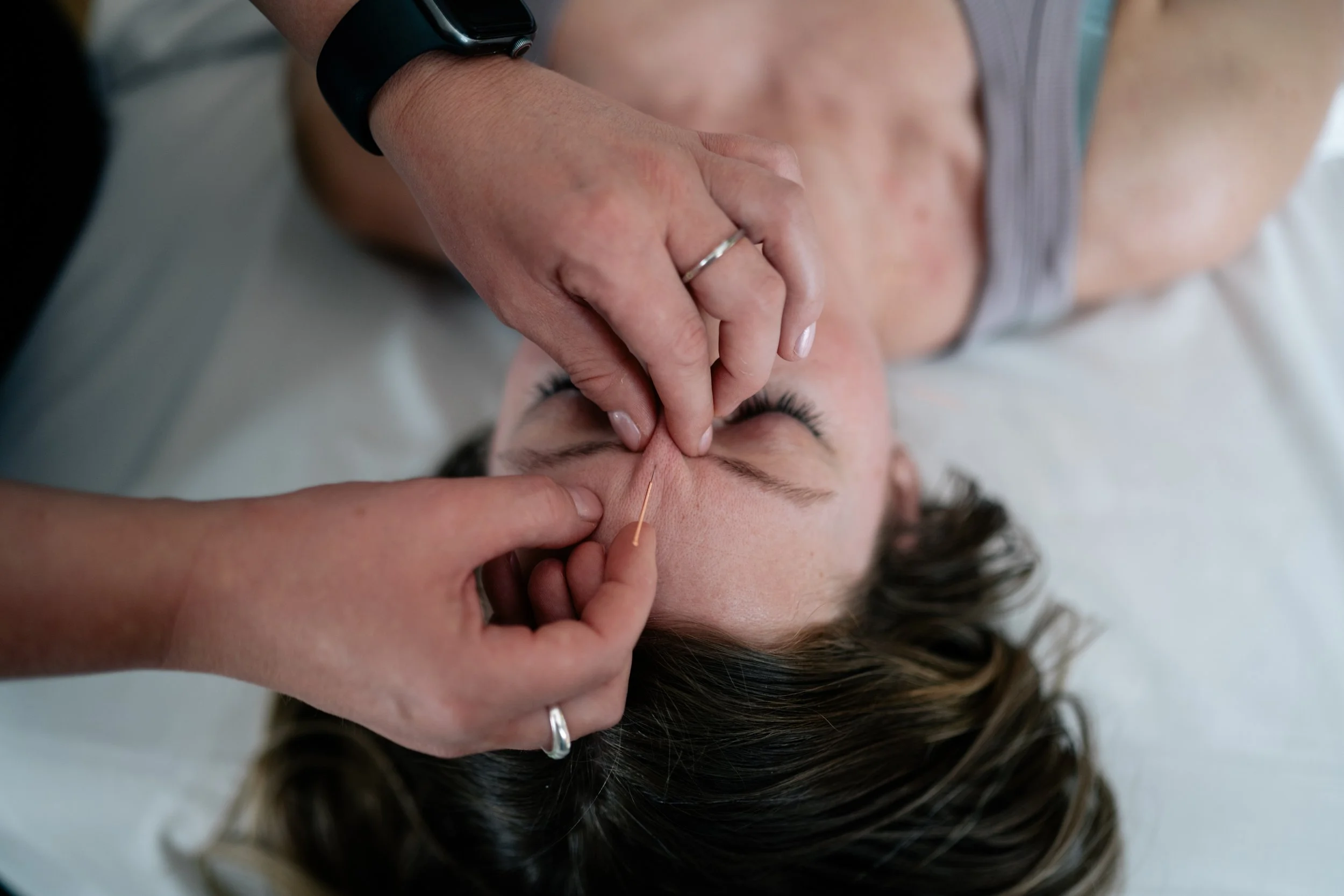
Once the needles are placed, many people notice their body beginning to settle.
Some people become very relaxed.
Some get sleepy.
Some describe feeling like they can finally take a deep breath.
And sometimes that's exactly what your body needs:
A little time where you don't have to do anything.
You Don't Have to Wait Until You're Burned Out
You don't need to be completely overwhelmed before you start paying attention to your nervous system.
If you're noticing that you're sleeping poorly, carrying constant tension, feeling anxious or overwhelmed, experiencing digestive changes, or simply don't feel like yourself, it may be worth looking at the bigger picture.
Your symptoms may not be completely separate problems.
Sometimes they're different ways your body is responding to the same underlying stress load.
At Bridgeland Acupuncture & Wellness, my goal is to help you feel more at home in your body.
Acupuncture doesn't have to replace the care you're already receiving. It can be one piece of a bigger healthcare picture, working alongside your doctor, therapist, and other healthcare providers when appropriate.
Ready to Support Your Nervous System?
If you're feeling stressed, overwhelmed, exhausted, or simply out of balance, acupuncture may be a supportive place to start.
Dr. Robin at Bridgeland Acupuncture & Wellness offers personalized acupuncture treatments in Calgary, as well as mobile acupuncture appointments in the comfort of your home.
You don't have to wait until your body is completely burned out to start listening to it.