
Acupuncture for Sleep: How Acupuncture May Help You Sleep Better
You’re exhausted.
You’ve been tired all day. You’re looking forward to getting into bed, and then suddenly… your brain has other plans.
You replay conversations. Make tomorrow’s to-do list. Check the time. Think about something that happened three years ago for absolutely no reason.
Or maybe falling asleep isn’t the problem. Maybe you fall asleep easily but wake up at 2 a.m., 3 a.m., or 4 a.m. and struggle to get back to sleep.
And after enough nights like this, you start wondering:
Why am I so tired if I’m actually sleeping?
Sleep is one of those things we tend to take for granted until it stops working well. And when sleep is disrupted, it can affect almost everything else; energy, mood, concentration, pain, digestion, stress tolerance and your ability to simply feel like yourself.
This is one reason sleep is something I regularly talk about with patients at Bridgeland Acupuncture & Wellness.
Why does stress affect sleep so much?
Your nervous system plays an important role in sleep.
During the day, your body needs to be able to respond to demands, solve problems and stay alert. Your sympathetic nervous system helps with that.
At night, however, your body needs to shift toward a state that allows you to rest and recover.
The problem is that modern life doesn't always make that transition easy.
Work stress, caregiving, chronic pain, hormonal changes, anxiety, illness, busy schedules and simply having too much on your plate can all make it harder to settle down at night.
You can be physically exhausted while your nervous system still feels like it needs to stay "on."
This is one version of what people often describe as feeling wired but tired.
And sometimes, the more you worry about not sleeping, the harder sleep becomes.
What does poor sleep actually look like?
Sleep problems don't always mean lying awake for hours every night.
You might notice:
Trouble falling asleep
Waking frequently throughout the night
Waking too early and being unable to fall back asleep
Feeling like your sleep isn't restorative
Racing thoughts at bedtime
Feeling tired even after a full night in bed
Relying heavily on caffeine to get through the day
Increased irritability or emotional sensitivity
Brain fog or difficulty concentrating
More tension or headaches
Increased sensitivity to stress
Feeling exhausted but unable to relax
Sometimes sleep is the first thing to change when your body is under prolonged stress.
And sometimes it's the symptom that tells you something else needs attention.
Can acupuncture help with sleep?
Research on acupuncture for insomnia is still developing. Some studies suggest acupuncture may improve sleep or insomnia symptoms, but many of the studies are relatively small or have limitations, so we can't say that acupuncture is a guaranteed treatment for insomnia.
What we can say is that acupuncture is being studied for its effects on systems involved in sleep, stress and nervous-system function.
From a Traditional Chinese Medicine perspective, sleep is also considered part of the bigger picture.
Rather than simply asking, "How do I make this person sleep?"
I want to understand:
Why isn't your body sleeping well right now?
That might mean looking at stress, digestion, pain, menstrual or hormonal changes, energy levels, emotional health, daily habits and what else is happening in your life.
Acupuncture for the "wired but tired" feeling
This is one of the most common sleep complaints I hear.
You are exhausted.
You desperately want to sleep.
But when your head hits the pillow, your mind becomes incredibly busy.
Sometimes people describe feeling like their body is tired but their brain hasn't received the memo.
Acupuncture may be useful as part of a broader approach to supporting relaxation and nervous-system regulation.
And sometimes the goal isn't simply "fall asleep faster."
It's helping your body become more comfortable with slowing down.
What if you wake up in the middle of the night?
Waking during the night is incredibly common, but the reason isn't always the same for everyone.
Stress, anxiety, pain, environmental factors, medications, alcohol, hormonal changes and other health conditions can all contribute to disrupted sleep.
This is why I don't believe in a one-size-fits-all acupuncture treatment for sleep.
Your treatment should make sense for your symptoms and your overall health.
For example, someone whose sleep is being disrupted by chronic shoulder pain may need a very different treatment approach than someone whose main problem is racing thoughts or hot flashes during perimenopause.
Sleep and the nervous system
Sleep is closely connected to the nervous system, which is why sleep fits so naturally into the conversation about nervous-system regulation.
Your nervous system isn't supposed to be "off" all the time.
It needs to move between alertness and rest.
The goal is flexibility.
You want to be able to respond when something stressful happens, and then eventually come back down.
When your body has been dealing with prolonged stress, that transition can feel much harder.
You may notice that you're tired but restless, tense but exhausted, or mentally busy even when your body desperately wants rest.
Acupuncture may be one tool that supports that process.
What happens during an acupuncture treatment for sleep?
When you come in for acupuncture, we don't just talk about your sleep in isolation.
I'll ask questions about:
When your sleep problems started
Whether you have trouble falling asleep or staying asleep
What time you tend to wake up
Your stress levels
Energy throughout the day
Digestion
Pain or tension
Menstrual or hormonal changes
Your general health and medications
What else has changed recently
From there, I create an individualized treatment based on your symptoms and your Traditional Chinese Medicine pattern.
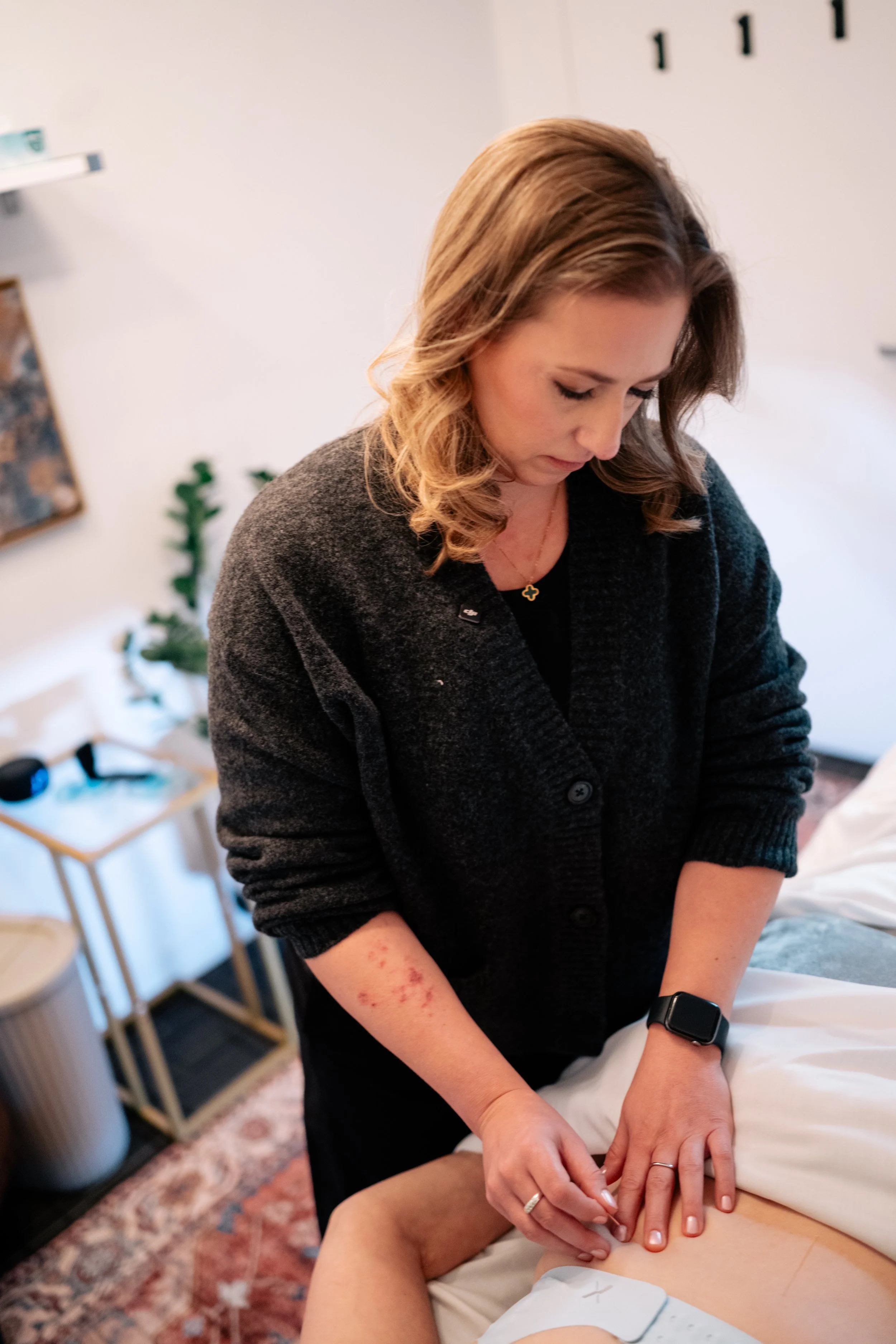
During treatment, many people find the experience deeply relaxing. You may notice your breathing naturally slows, your muscles soften and your mind becomes quieter.
You don't have to "try" to relax.
That's part of the point.
Acupuncture isn't the only answer for sleep
If you're dealing with chronic insomnia, acupuncture should not replace appropriate medical or behavioural care.
Cognitive behavioural therapy for insomnia (CBT-I) is one of the best-supported treatments for chronic insomnia and is strongly recommended in clinical guidelines.
Sleep problems can also sometimes be a sign of another health issue, so persistent or significant changes in sleep are worth discussing with your doctor or another qualified healthcare professional.
Acupuncture can be used alongside that care.
That's actually how I prefer to think about acupuncture in general.
It doesn't have to be either/or.
You can work with your doctor, therapist, sleep specialist or other healthcare providers while also using acupuncture as part of your overall approach to feeling better.
You don't have to wait until you're completely exhausted
If you're consistently waking up tired, lying awake at night, or feeling like your nervous system never really shuts down, it's worth paying attention to.
Your body is giving you information.
Sometimes improving sleep means looking beyond sleep itself.
Stress. Hormones. Pain. Digestion. Anxiety. Your nervous system. Your overall health.
They're all connected.
At Bridgeland Acupuncture & Wellness, I take the time to look at the bigger picture and create an individualized treatment plan based on what you're actually experiencing.
Because the goal isn't simply to spend more hours in bed.
It's to help you feel more rested, more regulated and more like yourself during the day, too.