
Acupuncture for Perimenopause: How Acupuncture May Support Symptoms & Hormonal Changes
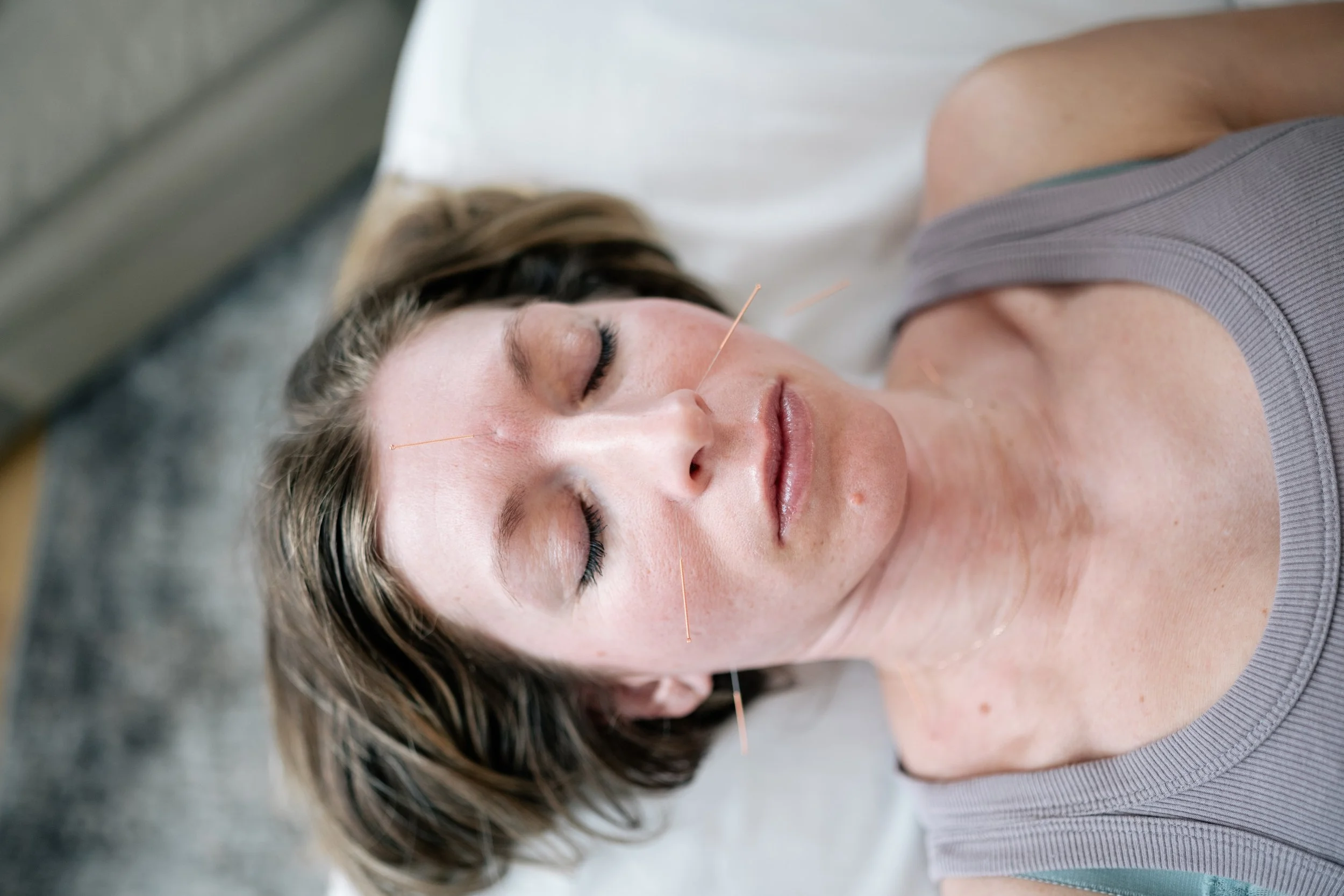
You might not feel like yourself lately.
Your period has suddenly become unpredictable.
You're waking up at 3 a.m.
You're sweating when everyone else seems perfectly comfortable.
Your patience is… gone.
Your brain feels foggy.
You're exhausted, but somehow can't sleep.
And you're wondering:
Is this perimenopause?
Perimenopause can be a confusing stage of life because it doesn't always arrive with one obvious symptom.
Instead, things can start changing gradually.
Your cycle changes.
Your sleep changes.
Your mood changes.
Your body temperature changes.
And suddenly the things you used to take for granted don't feel quite so predictable anymore.
If this sounds familiar, you're not imagining it.
And you don't necessarily have to simply put up with it.
What is perimenopause?Perimenopause is the transition toward menopause.
During this stage, reproductive hormone levels become more variable, and menstrual cycles can become less predictable.
For some women, the transition is relatively mild.
For others, symptoms can significantly affect sleep, energy, mood, work and everyday life.
Common symptoms can include:
Irregular periods
Heavier or lighter periods
Hot flashes
Night sweats
Sleep disruption
Fatigue
Anxiety or increased emotional sensitivity
Mood changes
Brain fog
Headaches
Changes in libido
Vaginal or urinary symptoms
Muscle or joint discomfort
Not every symptom is necessarily caused by perimenopause, though.
That's important.
New or significant symptoms should be evaluated appropriately, particularly when they are unusual for you or interfering with your daily life.
Why can perimenopause affect so many things?
Hormones interact with many systems throughout the body.
As hormone patterns change, you may notice changes not only in your menstrual cycle but also in sleep, temperature regulation, mood, energy and other aspects of your well-being.
And then there is the nervous system.
If you're waking several times a night because of night sweats, you're not getting the same restorative sleep.
If you're not sleeping, you're probably more sensitive to stress the next day.
If you're more stressed, you may feel more anxious, irritable or overwhelmed.
And suddenly one symptom has turned into five.
This is why I don't like looking at perimenopause symptoms individually.
Your body is connected.
Can acupuncture help with perimenopause?
Acupuncture has been studied as a complementary approach for menopausal and perimenopausal symptoms.
Research suggests acupuncture may help some women with symptoms such as hot flashes and other menopause-related concerns, although the evidence is mixed and studies don't always show acupuncture performing better than sham acupuncture.
More recent research continues to investigate different acupuncture approaches for perimenopausal symptoms. A 2025 systematic review and network meta-analysis included 49 randomized controlled trials involving more than 4,500 participants and found differences between acupuncture approaches, although the authors' findings should still be interpreted in the context of the quality and variability of the underlying studies.
So I don't tell patients that acupuncture will "balance your hormones."
That's not how I think about it.
Instead, acupuncture may be used to support specific symptoms and your overall experience during this transition.
Acupuncture for perimenopause hot flashes
Hot flashes can be one of the most frustrating symptoms of perimenopause.
You're sitting at your desk.
You're having dinner.
You're trying to sleep.
And suddenly you feel like someone turned the thermostat to tropical.
Hot flashes can also happen at night, becoming night sweats that interrupt sleep.
Research has found that acupuncture may reduce the frequency or severity of hot flashes compared with no treatment, although benefits compared with sham acupuncture are less clear.
That distinction matters.
Acupuncture may be helpful for some women, but it isn't a guaranteed solution.
Acupuncture for perimenopause and sleep
Sometimes the biggest complaint isn't the hot flash itself.
It's what happens afterward.
You wake up.
You're sweaty.
Now you're awake.
You look at the clock.
You realize you have to be up in four hours.
And suddenly your brain is wide awake.
Sleep disruption can become one of the most exhausting parts of perimenopause.
Acupuncture may be considered as part of a broader approach to supporting sleep and relaxation.
And because sleep problems during perimenopause can have multiple contributing factors, treatment should consider the bigger picture rather than simply treating "insomnia."
Your stress, pain, temperature changes, menstrual cycle, digestion and overall health can all be relevant.
What about anxiety and mood changes?
Perimenopause can be an emotionally challenging time.
You may feel more anxious than usual.
You may notice that small things suddenly feel overwhelming.
You may be more irritable.
Or you may simply feel like your emotional reactions aren't quite what you're used to.
Again, there can be many reasons for these changes.
Acupuncture may be used as a complementary therapy for stress and overall well-being, but it should not replace appropriate mental-health or medical care when symptoms are significant.
If you're experiencing persistent anxiety, depression, major mood changes or thoughts of harming yourself, please reach out to an appropriate healthcare professional.
Acupuncture can be part of supportive care, but it doesn't need to carry the entire load.
Perimenopause and the nervous system
This is where my nervous-system work connects with women's health.
Your nervous system has to respond to everything happening around you, and everything happening inside you.
When your sleep is disrupted, your stress tolerance may decrease.
When you're stressed, you may notice more muscle tension, headaches, digestive changes or difficulty sleeping.
When you're going through hormonal changes, all of those things can feel amplified.
This doesn't mean your nervous system is "broken."
It means your body is adapting to change.
Acupuncture may help support nervous-system regulation by stimulating sensory nerves and influencing pathways involving the brain, spinal cord and autonomic nervous system.
That's one reason I often look at stress and nervous-system function alongside hormonal symptoms rather than treating them as completely separate issues.
What does a perimenopause acupuncture treatment look like?
Your treatment is individualized.
We'll talk about what has changed, what's bothering you most and what your symptoms look like over time.
I'll ask about things such as:
Your menstrual cycle
Sleep
Hot flashes and night sweats
Stress
Mood
Energy
Digestion
Headaches
Pain
Medications and health history
Other symptoms you're experiencing
From there, I'll create a treatment based on your individual presentation and Traditional Chinese Medicine pattern.
You don't need to arrive knowing exactly what is "wrong."
You also don't need to have every symptom on the list.
Sometimes you're simply thinking:
"I don't feel like myself anymore."
That's enough of a reason to start the conversation.
Acupuncture doesn't have to replace your other healthcare
One of the things I care about most in my practice is bridging Eastern and Western medicine.
If you're working with your doctor, gynecologist, nurse practitioner, therapist or another healthcare professional, acupuncture can exist alongside that care.
You don't have to choose.
Hormone therapy, medications, lifestyle changes, therapy, nutrition, exercise, acupuncture and other approaches can all have different roles depending on your individual situation.
The goal is not to replace one system with another.
It's to give you more tools.
You deserve support through the transition
Perimenopause is a normal stage of life.
But that doesn't mean you have to suffer through symptoms that are affecting your sleep, work, relationships or quality of life.
If you're dealing with changing periods, hot flashes, night sweats, poor sleep, anxiety, brain fog or simply feeling unlike yourself, acupuncture may be one supportive option to consider.
At Bridgeland Acupuncture & Wellness, I take the time to understand what's actually happening in your body rather than treating your symptoms as isolated problems.
Because sometimes what you need isn't someone telling you, "Yep, that's just hormones."
Sometimes you need someone to say:
"Okay. Let's look at the whole picture."